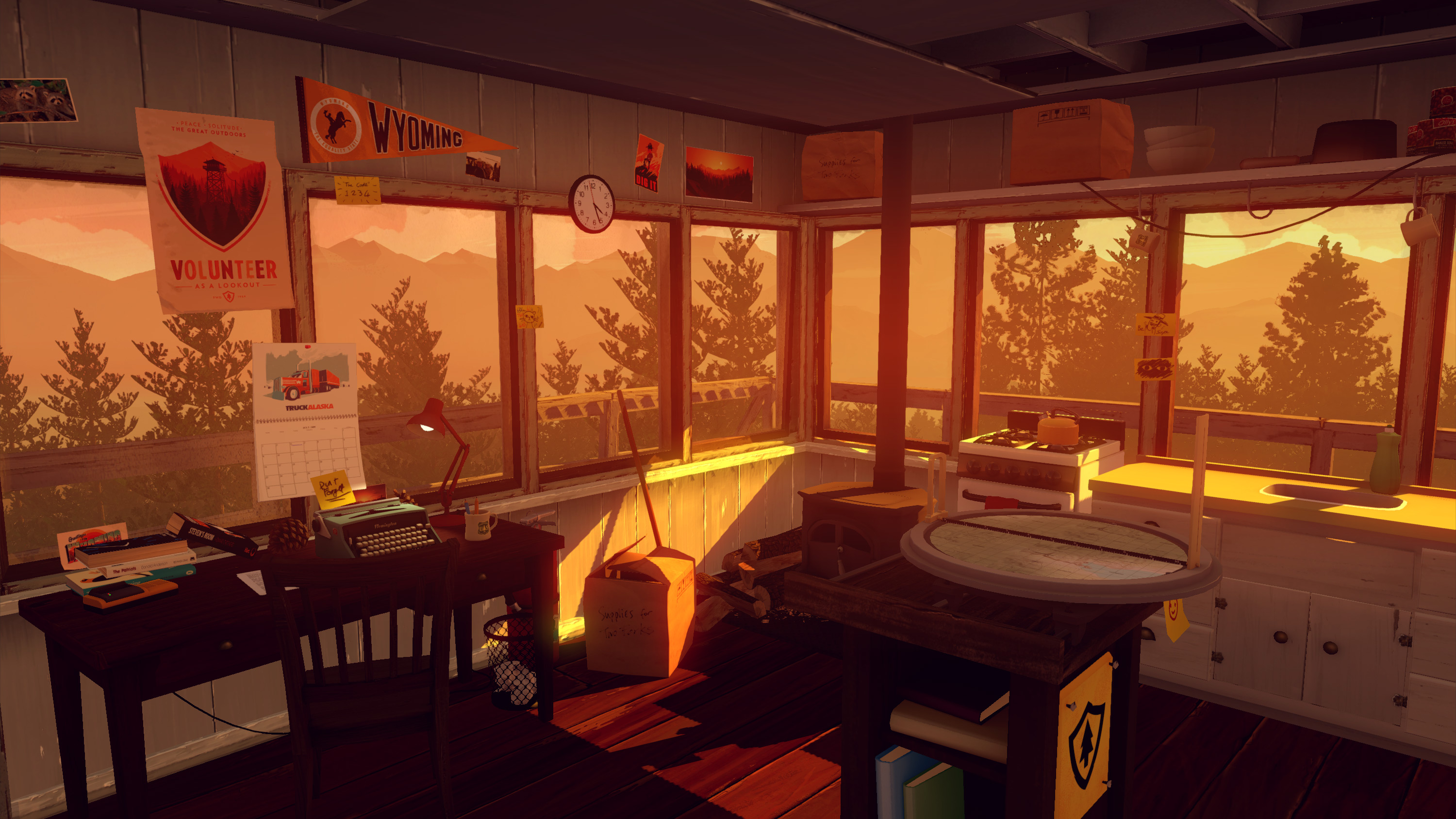
Last night I finished Firewatch. It’s a first-person mystery game, being rudely dubbed a ‘walking simulator’ by some of the reviews I’ve seen elsewhere. While it’s true, the game has you fulfilling various tasks in a forest in which you navigate solely by hiking, that description completely ignores the beautifully told story and the reason you are there at all. Having completed it, I want to recommend it to everyone because it’s fantastic. I also would say that the less you know the better, so don’t read the rest of this review, just go and get it.
Still here?
Okay, well I’m going to talk a little about the setup and there’s no way to really delve into that without spoiling the beginning of the game, just so you know.
You play as Henry, a 40-something aged man, which by itself is pretty unique in the world of videogames. He’s lived, he’s been around, and he has shit to deal with. During the opening sequence, you’re shown a series of snippets of Henry’s past in the form of some elegantly written prose. You pick a few answers to questions such as what you said to the girl at a party when you were younger. Her name is Julia, she becomes your girlfriend, and then your wife, and you choose what they named their pet dog, and whether they planned to have kids or not. All very simple, but incredibly effective way to pull you into Henry’s character.
In a heart-wrenching moment, (still within the game’s opening, which is just these text prompts interspersed with a few first-person scenes of you hiking into the woods) you learn that Julia has early onset dementia. She has problems at work, becomes forgetful, and eventually loses her job altogether due to this horrible condition. She deteriorates very quickly, and sometimes forgets who Henry is… Henry has to decide whether to try and look after her himself, which he’s not really qualified to do, or whether to see his own wife taken into a nursing home, and you get to make that decision. Suddenly, you wonder what this has to do with a man taking a job in a forest for the summer to become a watchman.
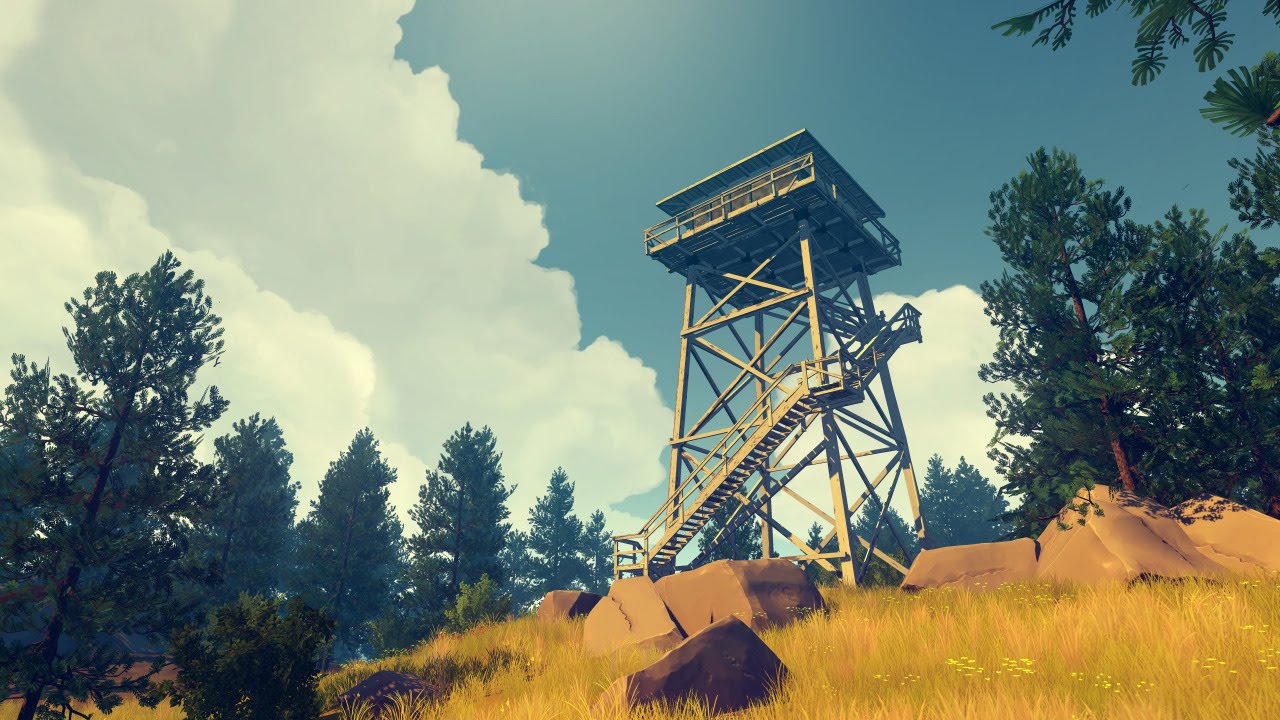
He’s running away. It has become too much for him, and Julia’s family take her home to live with them in Australia leaving Henry alone to figure out what to do next. He decides to take up a summer job in the Wyoming forest. The opening sequence ends with you emerging out of the woods to a wooden watchtower, your new home for the duration of the game, and that’s when you meet Delilah.
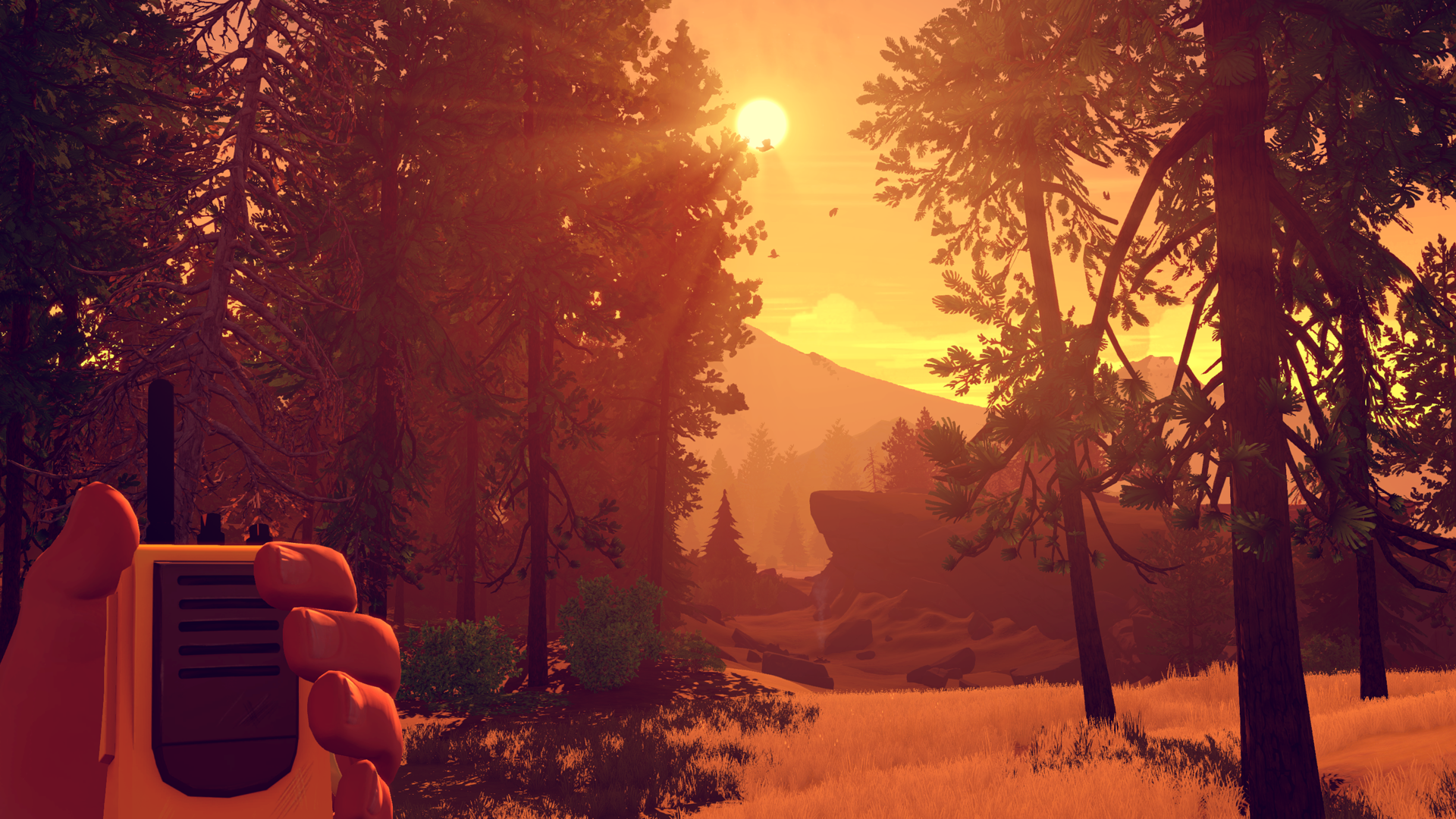
Delilah is your boss, a fellow forest ranger living in the tower across the valley, and talks to you via a radio. The radio becomes a lifeline between your isolation and contact with another human. You spend most of the game alone, but Delilah is always there to offer a quip, a sarcastic comment or some guidance on where to go next as you interact with objects and scenery in the forest.
The choices you make in the opening sequence affect the dialogue conversations you have with Delilah in a subtle and natural way that helps you connect to the story on a personal level. It just feels so adult and well done compared to what we’re used to in videogames. I want to call it ‘mature’ but that sounds tedious because it doesn’t do it justice. Delilah and Henry both feel like real human beings. They talk about themselves (if you choose to), they joke about their job, they argue, they laugh, they get to know each other. It’s hugely engrossing.
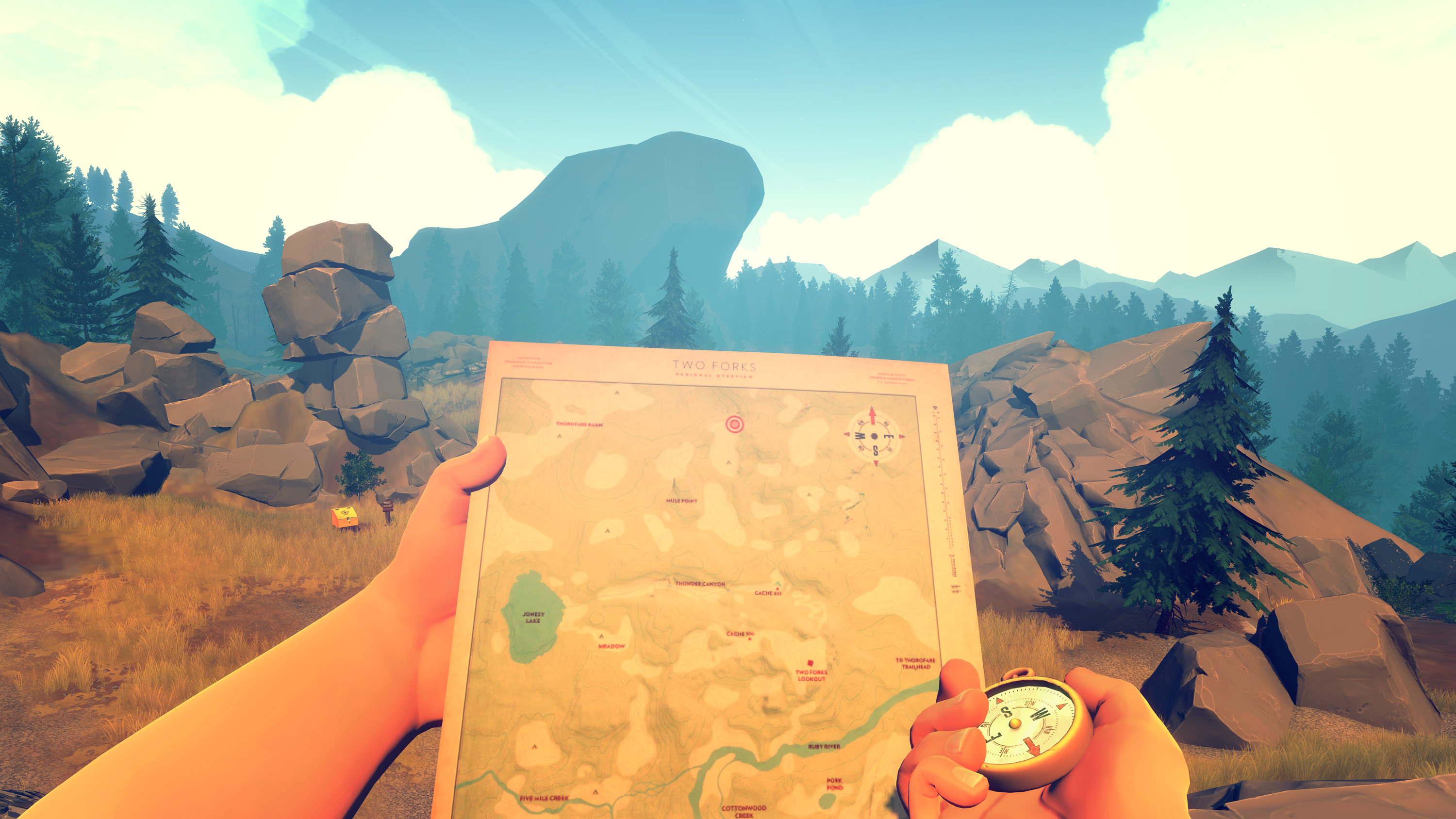
You will do a lot of hiking, and while the area feels like a sprawling forest, it’s cleverly designed to feel bigger than it really is. It only takes about 5-10 minutes to jog from one end of the map to the other, but you will rarely be required to do this. More often than not, the game’s various tasks take you to new spots on the map that conveniently link to the next area, and it’s a joy to navigate and explore. The art design is gorgeous, featuring a subtle transition from day to night as the time progresses, with a stylised aesthetic that feels like a cross between a cell-shaded cartoon and a Pixar animation. It’s consistently stunning.
As the story develops, I found myself pulled into the mystery involving missing hikers, teenage vandals and a secluded fenced off zone that isn’t marked on any of the maps… Am I really alone out here? Is someone following me? Are they listening to our conversations…? The tension ramps up, but never to the point of outright horror. There are no cheap jump scares, only intrigue and a growing sense of paranoia.
All the time, I was worried about Henry’s well-being. He’s a man that has been through a lot of emotional turmoil, and I don’t blame him for deciding to escape for a while to clear his head. He feels guilty about being there, and I did too when I found myself talking to Delilah about things a married man probably should not. But it feels so real, and natural to do so. Games rarely explore this kind of territory. I think the story would translate to a film pretty well, but the fact that it’s interactive makes you connect with it on a deeper level and it’s one of the most rewarding gaming experiences I’ve had since I finished the Mass Effect trilogy. All this despite being only 6 hours long and just a ‘walking simulator’. Man I hate that phrase.
Some people might be put off by the short run-time and relatively high-price point. Had I not been bought it for my birthday, I wouldn’t have spent £14.99, but would rather have waited for a sale-price. But such is the nature of Steam, you know it’ll be one of those games that you’ll be able to pick up for a fiver in one of the numerous sales across the year. And Easter is just around the corner…
Firewatch is brilliant. As an interactive piece of storytelling fiction, it’s one of the best out there. It is intriguing and beautifully presented with stunningly stylised art design. The writing is some of the best I’ve come across in gaming and the voice acting second to none. I highly recommend it.
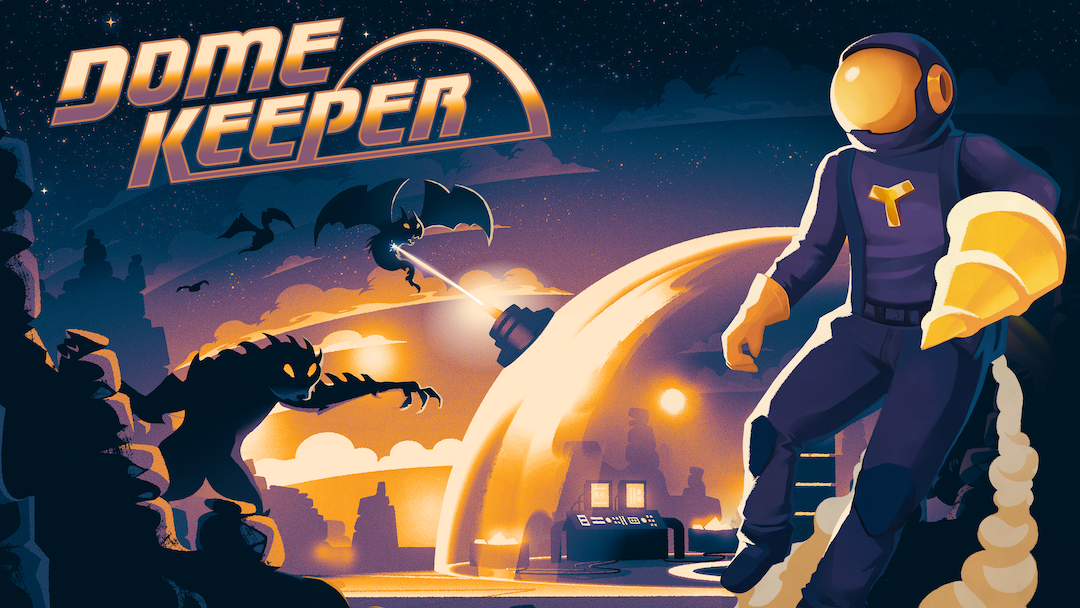
Dome Keeper is an excellent little spin on the tower defense game, in which you play the role of a jetpacking miner defending his base from swarms of aliens, whilst searching for a hidden relic buried somewhere beneath him. And now, with this huge free update, you can play it with friends.
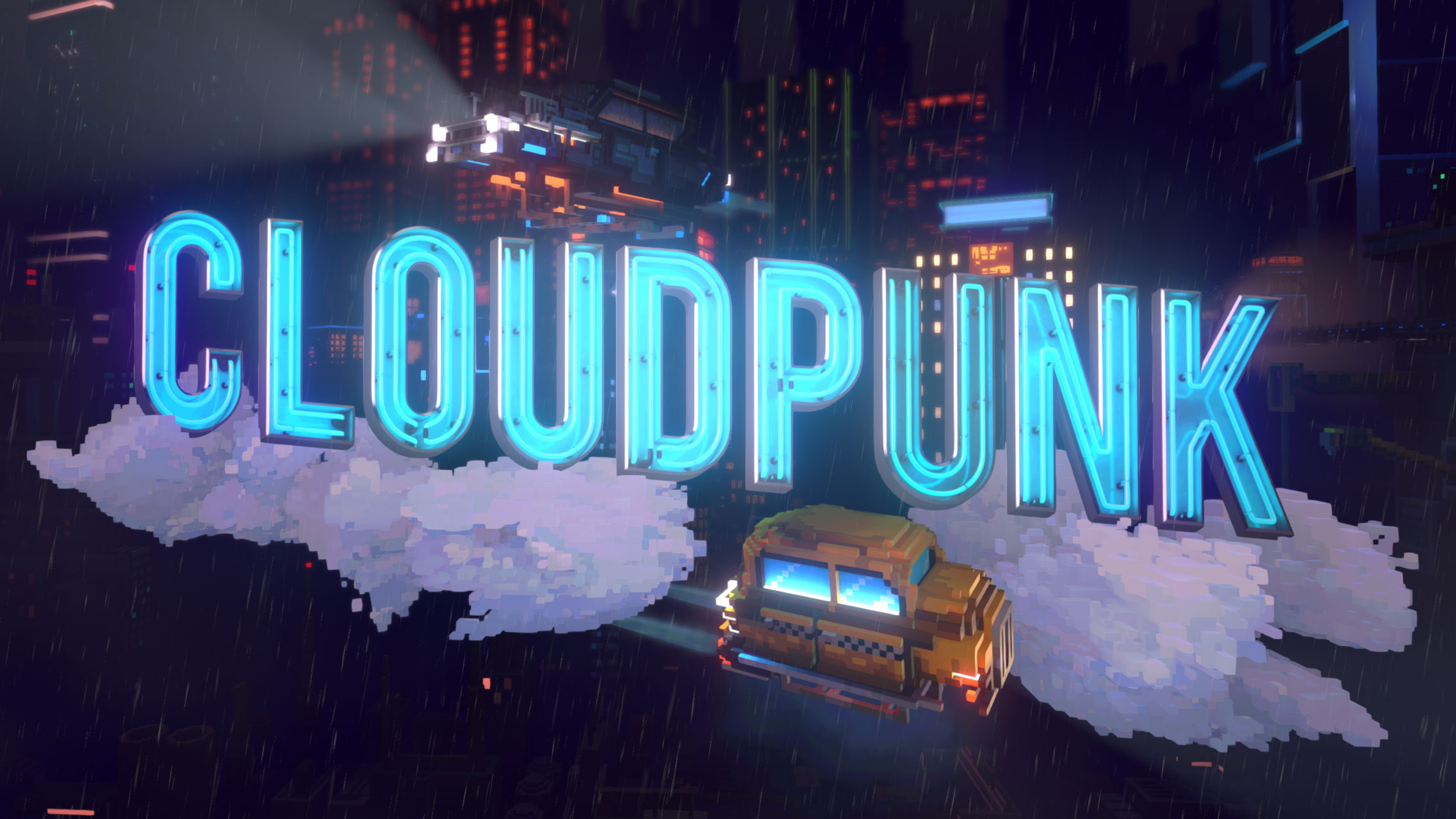
I want to talk about Cloudpunk, a game where you get to be a flying-car delivery driver in a futuristic cyberpunk city. Its world is an incredible achievement of environmental design, and while the gameplay itself may be basic, the city of Nivalis is a thing of beauty to behold. Nivalis is built out of hundreds of hand-modelled cuboid buildings; there’s nothing procedural about it. Apparently it took 3 years for the devs to design the city, and it really shows.
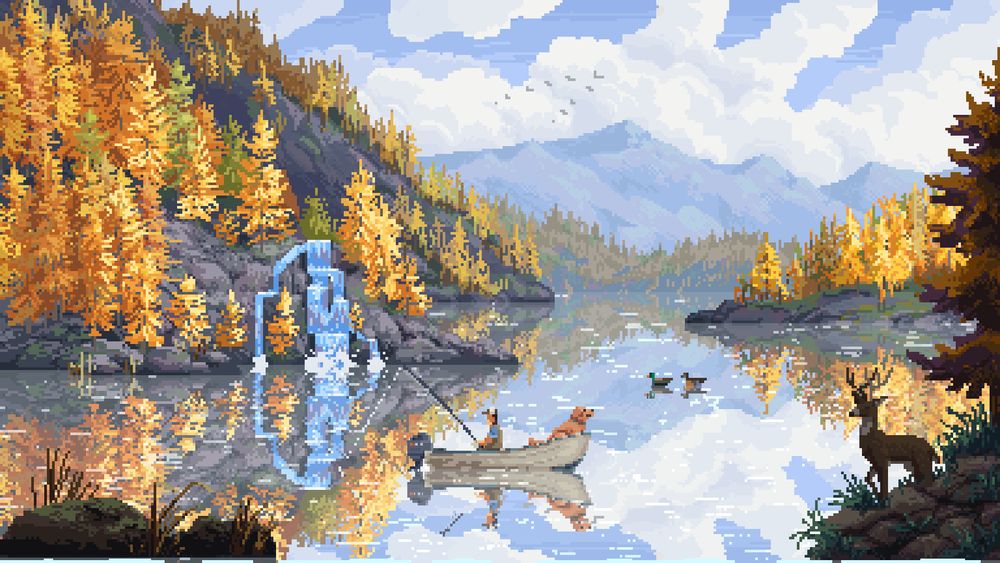
I do love me some quality pixel art, and it doesn’t get much better than this. Cast n Chill is a cozy side-scrolling fishing game by small indie dev team Wombat Brawler, with absolutely gorgeous visuals. It’s simple to play, and you you can dip in and out of it at your leisure, making it a fine addition to our collection of coffee break games.
Don’t kill people. That’s the ARC’s job. Make no mistake, I ain’t no softie. Just coz I won’t attack you first, don’t mean I won’t defend meself from a rat bastard who likes the look of my backpack! The rustbelt is a volatile place. I’ve seen what it’s done to us. What it does to the mind. But we gotta stick together, fight for humanity, and focus our efforts where it truly matters – FOR SPERANZA!
The successor to Goldeneye, Perfect Dark improved every possible aspect of the classic shooter and created an original masterpiece. 4-player multiplayer game modes, with the option of adding 8 extra bots made matches frantic chaos and endless fun. The singleplayer was fantastic at the time, featuring such state-of-the-art features as realtime lighting, blood spatter effects, and fully voice acted cinematic cutscenes. It even let you play the story in local co-op with a mate – player 2 got to be Joanna Dark’s weird-looking blonde sister – the first game I ever encountered with a co-op singleplayer mode.
Portal is one of those games that sprang out of nowhere, taking everyone by surprise and causing a storm all across the internet. With almost no hype, and zero expectations, it came bundled as a throwaway extra in The Orange Box, arguably the best game bundle ever made.